99% Pure Does Not Mean The Vial Holds 10 Milligrams. Almost Nobody Checks The Second Number.
A chromatogram can show one dominant peak. It takes a separate measurement to tell you how much of the identified material is in the vial.
Read the units first
A typical HPLC area percentage compares the area of one detected peak with the total area of the peaks included in the calculation. The answer depends on the method, the detector and which signals the laboratory includes. Look for those details beside the result.
Milligrams per vial answer a different question. Two vials can give the same relative peak areas even when one contains less material than the other.
Look for a quantitative result
Find a line reporting content in milligrams per vial or another explicit quantity. A calibrated assay compares the sample response with a reference of known concentration. Check the units, the reported basis and the lot identifier before comparing the result with the label.
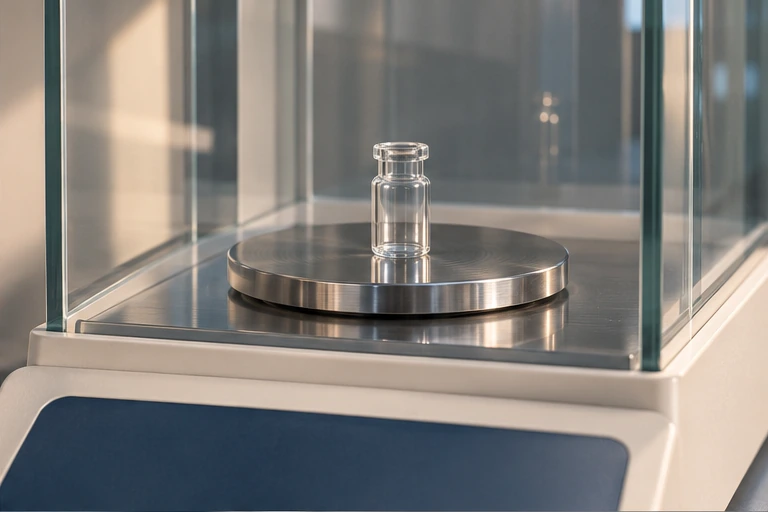
A gross weight can include the container, closure or other material. Even a tare-corrected fill weight may include water, salts or excipients. Only compare values measured on the same basis.
Keep both numbers in your record
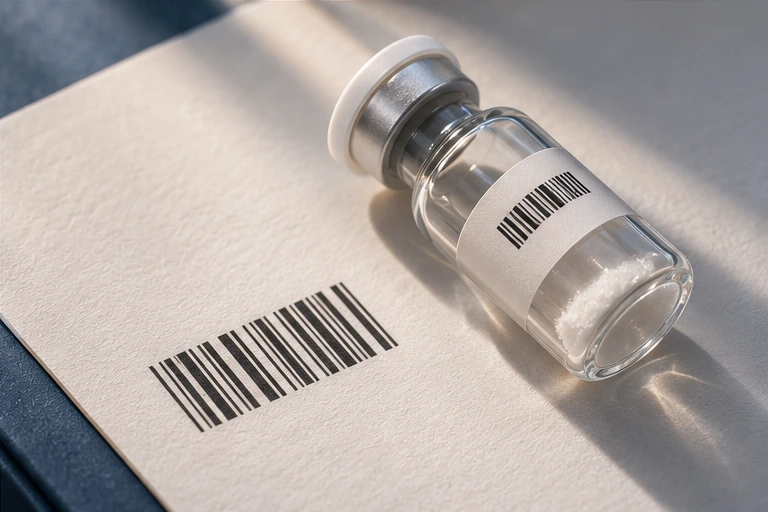
Record the label claim, measured content, purity method and certificate identifier together. If the report gives only peak area, leave the content field unreported and request the lot-specific quantitative result.
Record one percentage and one amount, each with its method and the matching lot code.